


Modern urban road lighting faces far more challenges than simple brightness supply. Municipal engineering teams, property management companies, and road construction contractors constantly struggle with frequent lamp failures, excessive power consumption, uneven light distribution, and hidden safety hazards caused by aging fixtures. Most ordinary street lighting products only meet basic lighting standards, ignoring deep-seated problems such as heat dissipation decay, glare pollution, short service life, and difficult maintenance. Choosing reliable high power LED street light becomes the core solution to optimize municipal lighting systems and cut overall operating expenses year after year.
Many buyers only focus on unit price and luminous flux when purchasing street lamps, easily overlooking chip quality, housing heat dissipation structure, waterproof grade, and anti-corrosion performance. These invisible factors directly determine whether the lamp can operate stably in heavy rain, high temperature, cold frost, strong wind, and dusty outdoor environments. Low-cost inferior LED street lights often cause light attenuation within 6–12 months, require frequent replacement and maintenance, and greatly increase labor and construction costs. Professional outdoor lighting suppliers like Comleds Lighting design integrated high-power street lighting systems targeting long-cycle outdoor operation scenarios, avoiding common pitfalls that plague most conventional lighting equipment.
Glare and uneven illumination are long-standing hidden problems in urban road lighting that are rarely noticed. Excessively concentrated light causes visual fatigue for drivers at night, increasing traffic accident risks, while dim dark areas on road edges create blind spots for pedestrians and vehicles. Standard high-power LED street lights adopt precise optical lens distribution design, which softens light output, expands uniform irradiation range, eliminates stray glare, and forms continuous, stable brightness coverage on roads, intersections, sidewalks, and parking areas. This optical optimization greatly improves night driving safety and complies with national road lighting safety specifications.
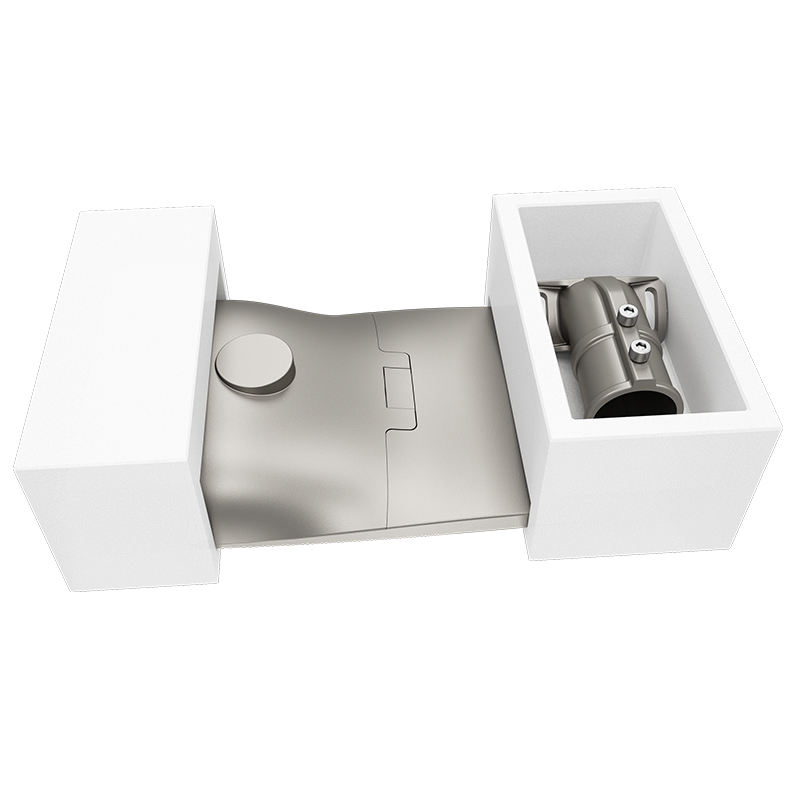
Power waste remains the largest hidden expenditure in municipal lighting operation. Traditional high-pressure sodium street lamps have extremely low photoelectric conversion efficiency, most electric energy is converted into heat loss instead of effective light. Coupled with continuous aging energy loss, annual electricity bills occupy a huge part of municipal public expenditure. High-power LED street lights adopt energy-saving semiconductor light-emitting technology, with far higher luminous efficiency under the same power. They maintain ultra-high brightness while reducing power consumption by more than 60% compared with traditional lamps, bringing sustainable electricity cost savings for long-term urban operation.
Outdoor harsh environments accelerate structural damage to street lamp fixtures. Humidity, acid rain, coastal salt mist, ultraviolet radiation, and temperature difference changes will corrode lamp shells, damage circuit boards, and cause short circuits, leakage, and spontaneous failure. Ordinary street lights lack professional sealing and anti-oxidation treatment, leading to frequent breakdowns during rainy and snowy seasons. Qualified high-power LED street lights support full-sealed waterproof and dustproof structure, high-temperature resistant aluminum alloy heat dissipation housing, and anti-UV aging surface treatment, adapting to all complex outdoor climates and greatly reducing unexpected shutdown faults.
Core Performance Comparison of Conventional Street Lamps & High-Power LED Street Lights
| Performance Indicator | Traditional Sodium Street Light | Ordinary LED Street Light | Premium High-Power LED Street Light |
|---|---|---|---|
| Energy Consumption per Unit Brightness | Extremely High | Medium | Ultra Low |
| Average Service Life | 8000–12000 Hours | 20000–30000 Hours | 50000 Hours & Above |
| Light Attenuation Speed | Fast Obvious | Medium Slow | Extremely Slow |
| Waterproof & Dustproof Grade | IP54 Below | IP65 | IP66 & Higher |
| Heat Dissipation Ability | Poor | General | Efficient Integrated Heat Dissipation |
| Annual Maintenance Frequency | Frequent | Moderate | Rare Maintenance Required |
| Environmental Adaptability | Poor Cold & Heat Resistance | Limited Climate Adaptation | All-Weather Stable Operation |
Heat dissipation performance directly decides the service life of high-power LED chips. High power output means concentrated heat generation; if the housing cannot dissipate heat quickly and evenly, chip temperature will keep rising, accelerating luminous decay and burning out lamp beads. Professional high-power LED street lights use die-cast aluminum integral heat dissipation structure, with large-area heat dissipation channels and optimized air convection design, keeping internal chip temperature stable under continuous 24-hour operation. This structural advantage fundamentally solves the short-life problem common in low-quality high-power lighting products.
Safety hidden dangers of circuit aging cannot be ignored in long-term street lamp operation. Loose wiring, poor insulation, water ingress short circuit, and leakage faults not only damage lamps but also threaten public safety and power grid stability. Reliable high-power LED street lights adopt isolated constant current drive power supply, stable voltage adaptation, overload protection, surge protection, and lightning protection functions. They resist instantaneous voltage shocks caused by thunderstorms and power grid fluctuations, ensuring safe and uninterrupted operation of the entire road lighting network.
Later maintenance and replacement costs often exceed the initial purchase cost for municipal lighting projects. Disordered product models, non-uniform interfaces, and fragile internal structures make disassembly and replacement extremely complicated. Standardized high-power LED street lights adopt modular integrated design, simple structure, convenient disassembly, and universal installation size. Construction workers can complete lamp body replacement and circuit debugging quickly, saving a great deal of manpower, time, and auxiliary construction costs for municipal management units.
In summary, selecting suitable high-power LED street lights is not only about improving road night brightness, but also systematically solving energy waste, safety hazards, frequent failures, high maintenance costs, and environmental adaptation difficulties. Scientific optical matching, efficient energy saving, durable structural design, and all-weather stability jointly create long-term practical value for urban road lighting, industrial park lighting, highway lighting, and rural road renovation projects. Stable and professional lighting products continuously optimize urban night environment, reduce comprehensive operating costs, and build safer, greener, and more durable public lighting systems.